Wednesday, February 6, 2013

Roan Kikunoi

One of the perks of living in Hong Kong is the opportunity to travel - Hong Kong International Airport is fantastically well-connected to hundreds of international locations, and getting in and out of the airport is the easiest I've experienced the world over. Also, it helps that the husband works for an airline, which offers some travel perks.

This past weekend, we did a weekend trip to Kyoto, one of my favorite spots in Japan. Kyoto is so lovely and serene - it's a city where you still get to see geishas dressed in kimonos walking around in the Gion district, where you can spend a relaxing night in a ryokan eating an exquisite kaiseki meal and bathing in onsen and where there are endless opportunities to eat delicious soba, tempura, tofu, green tea desserts, kaiseki and street snacks.

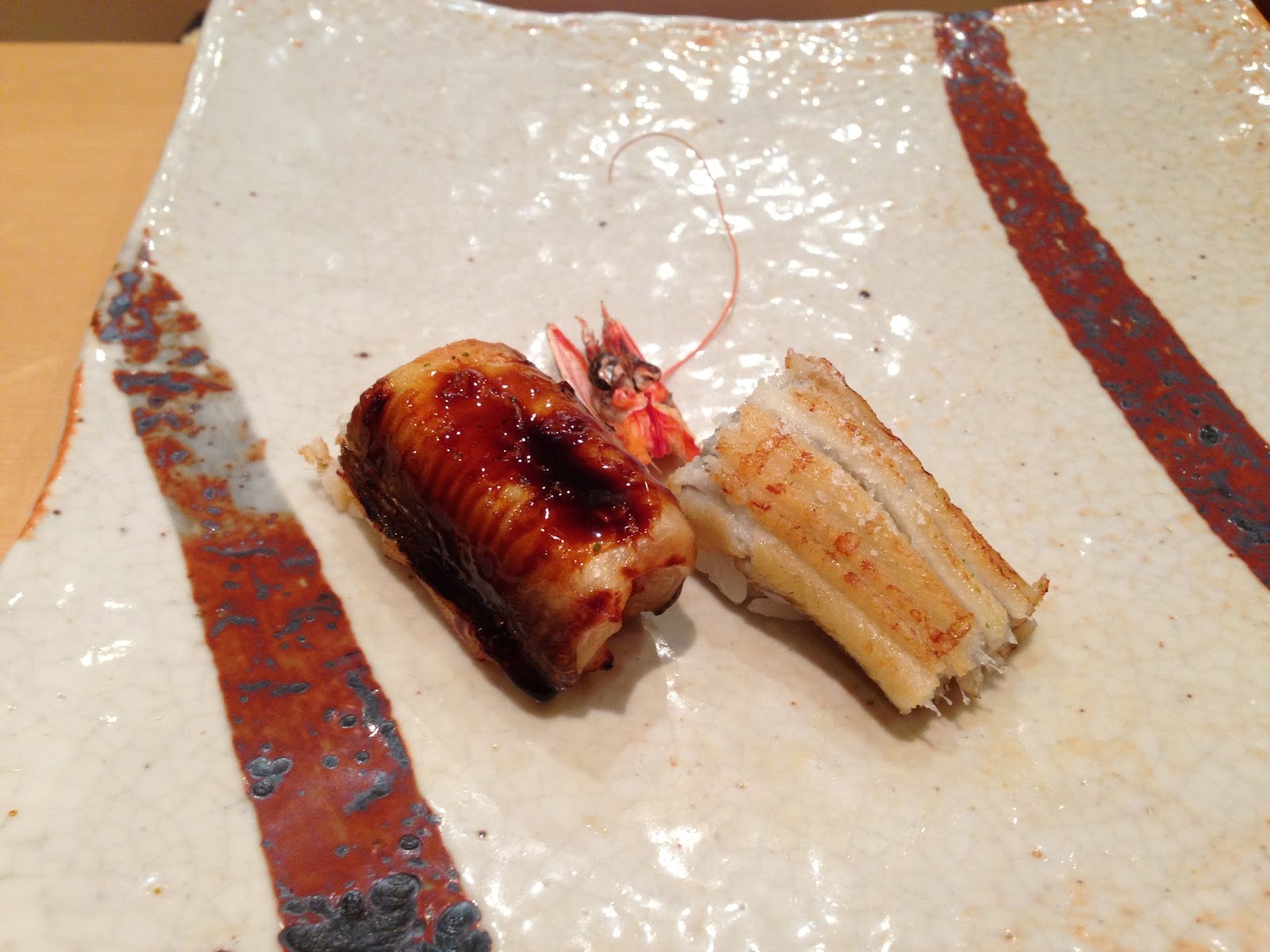
Our final meal in Kyoto was kaiseki at Roan Kikuno, a 2-Michelin starred restaurant featuring traditional Japanese cuisine.


Hassun (appetizers): "horse reins" sushi (no horse involved, supposed to be shapes to look like horse reins), cod roe terrine, marinated tofu in pickled-ume (Japanese plum), broccoli rabe with mustard, sweet black beans, whitebait with yuzu, steamed kabocha pumpkin, marinated Fuki buds in miso

Amuse: steamed snow crab with grated red turnip, ginger and crab roe


Sashimi (first course): hirame (flounder) and botan-ebi (sweet prawn), grated wasabi and nori, served with soy sauced and flounder liver sauce (not pictured). The hirame dipped in a sauce made of hirame liver was amazing - rich, savory, brimming with umami


 Sashimi (second course): koshibi (baby tuna) served with marinated egg yolk sauce

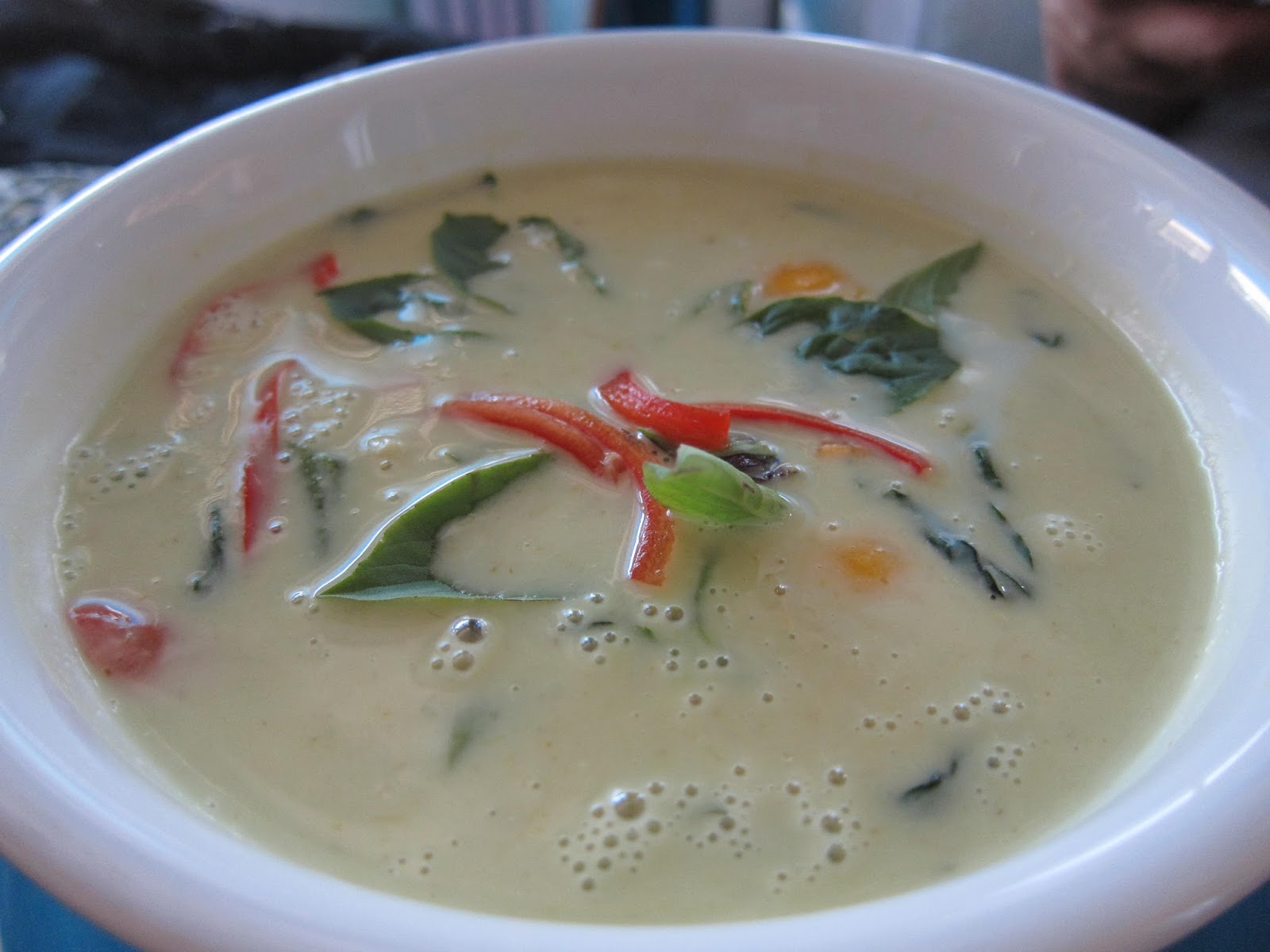
Soup: minced duck meatball, yomogi (mochi made of Japanese mugwort), arrowhead root, leek, daikon, yuzu, carrot and gold leaf

As we were only having lunch, we did a truncated version of the kaiseki meal, skipping a couple of the courses, such as the yakimono (grilled course). Our next course was Japanese hotpot served with a broth made of sake, daikon and sweet carrot and a plate of buri (amberjack) and mibuna greens, which you cook quickly in the broth, then dip into the ponzu sauce and eat.

Our rice course (always the penultimate course before dessert): rice steamed with tilefish and shiso. The chef painstakingly takes out every fish bone in front of you, then mixes the rice together with the fish and shiso and serves the rice in individual bowls.

Japanese pickles to accompany the rice. A burdock soup was also served, which is not pictured.

Dessert: homemade strawberry ice cream and "sponge cake pudding" - basically a pound cake soaked in eggy custard with a creme brulee top. I didn't think the strawberry ice cream paired very well with the cake, but the cake was rich, creamy and delicious!

While the meal was pretty good and each course did a good job of honing in on the subtle flavors of each of the ingredients, the experience was, on the scale of amazing Japanese meals, only a 7 out of 10. It may have had to to do with the fact that we were 45 minutes late (the gods were against us - for whatever reason, the traffic that morning was horrendous), which admittedly I know is a cardinal sin in haute Japanese dining but we didn't know there would be so much traffic! Our tardiness clearly angered the chef so much that he refused to serve us himself and instead made his sous chefs serve us. The only problem with that was that none of the sous chefs spoke English and were not able to instruct us on how to eat the dishes (for example, the hirame liver sauce was only for the hirame, and the ebi should be dipped in the soy sauce), so we'd fumble and try to figure it out, then the chef would come over and admonish us: "no no no, hirame goes in liver sauce! Dip more sauce, more sauce!" The service marred our overall experience - I suggest that if you don't want to suffer the wrath of the chef, make sure you are on time!

Food rating: *** and a half
Bang for buck rating: 3

The essentials:
http://kikunoi.jp/english/store/roan/
Location: 118 Saito-cho, Shijo-sagaru, Kiyamachi-dori, Shimogyo-ku, Kyoto
Average price of kaiseki: Lunch options for 4,200 yen, 7,350 yen or 10,500 yen; Dinner options from 10,500 yen to 18,900 yen

Sunday, November 4, 2012

Cilantro corn rice (and thoughts on food critiques)

I've become that person. A person I hoped growing up I'd never become: an ajumma. Ajumma in Korean means "married woman" or "middle-aged woman" - and like many Korean words, is perfectly fine when used in certain contexts and carries a negative connotation when used in others.

When I think of the word ajumma, I think of opinionated middle-aged Korean women who tell you what's up, even if you never asked. And that's exactly what I've become.

On a recent visit to one of HK's hottest newly opened restaurants, when one of the owners came to ask how the food was, my dining companions all answered as they were expected to, with assurances of "everything's delicious." I answered with a half-hearted "umm...it's good." pause. "I mean, some things could use some work, but generally the food was ok." I'm sure my friends wanted to hide under the table. But honestly, I thought I was being kind because: (1) the food was actually terrible, and I at least softened my response by saying it was ok, and (2) if a new restaurant wants to stay open in the long run and their food sucks, they need to fix it - but if people keep telling them that their mediocre food is good, they'll never know they have anything to fix.

The owner actually seemed interested in my response and asked what I would suggest. I told him their albondigas were too dry and needed to be made with fattier meat and that the potatoes in the tortilla espanola were undercooked, as were the onions, which should reach a caramelized state before the eggs are added. I could have gone on, but I thought I'd stop with the two most glaring shortcomings. The owner took my comments graciously and even sent a round of drinks our way. I hope the restaurant improves their food and succeeds, because I am a huge supporter of anyone trying to start a new food business, especially because I know how hard it is. And really, I'm trying to keep my ajumma comments to myself because I don't want to be that annoying opinionated customer!

When I opened love at first bite in Berkeley, I listened to people's suggestions, whether they were good or bad, reasonable or farfetched. Because as a business owner, that's what you have to do - you have to be open to both customers' praise and complaints. Sometimes, even when you want to tell people to go away, you have to smile and listen. And then you have to make a judgment call - whether their suggestion is worth taking into account or not. Sometimes, it's not.

One day, in the early days of the bakery, a person walked in and asked if we had any items that did not contain any of the following: gluten (which is in wheat), eggs, dairy or sugar. Um, an item that doesn't contain any flour, sugar, eggs or butter? In my head I screamed: "We sell cupcakes! What the hell do you think cupcakes are made of?!" But to the lady, I answered with the nicest smile I could muster: "I'm really sorry, we currently only have cupcakes and cookies that include those items, but you know what, we really should look into developing recipes that don't have any of them." She nodded in agreement and left the store. And I mentally checked her suggestion into the box called: NEVER.

Which is not to say that someone out there shouldn't open a bakery that is wheat-free, sugar-free, dairy-free and egg-free. Especially in Berkeley or the SF Bay Area, where there is certainly a market for it. But it just wasn't going to be me. In fact, one of the main reasons I decided to open love at first bite was because I felt that the area didn't have an old-fashioned American bakery - fancy French patisseries, artisan sourdough bread bakeries, vegan collective bakeries, yes. But not a good old-fashioned American bakery specializing in exactly what the woman didn't want: butter, sugar, flour, eggs.

However, in order to be successful, you have to take your customer base into account. And having lived in Berkeley for awhile, I knew that meant that I'd have to come up with at least a vegan cookie. But I refused to compromise on taste, or specifically, the down-home comforting taste of a lovingly made cupcake (which normally requires copious amounts of butter and sugar). In the end, I fiddled around until I came up with a recipe for vegan chocolate cake that was still sinfully rich and chocolatey, as well as a flourless almond orange torte that was moist and decadent. But I never could come up with a decent baked item that managed to be gluten-free, sugar-free, egg-free and dairy-free, which is why we never offered them (and to my knowledge, still are not offered at love at first bite). It's just not possible: it will not taste the way a cupcake should, in which case, you're better off not eating it.

Happily, the majority of my wonderful customers were perfectly content with what we were offering, and the niche we were trying to fill in otherwise vegan, hippie Berkeley (as a side note, I have absolutely nothing but respect for vegans and maintain a vegan diet myself, except that it includes meat, poultry, fish, eggs and lots of dairy).

These days, I cook mostly for my husband and myself, and the occasional dinner guest. And as fate would have it, I married a person who has an extremely sensitive palate. I've never been as nervous that someone would like my cooking or baking as I am with my husband. Mostly, because he's always right (don't ever tell him I said that).

There's rarely a meal that I prepare where when I ask him how the food is, he doesn't reply with "You know what would make it better? If you added a little [sugar/salt/garlic/soy/cheese/etc.]" And I have to admit - almost every single time, when I really parse the flavors in my mouth, I realize he's right. So when I put something in front of him and he says "this is good" without any other comment, I feel like I've won the James Beard award. And I can count on my fingers exactly how many times that's happened.

One of the first times he asked for seconds without any suggestion of how to make the dish better was when I made cilantro corn rice as a side dish to blackened Cajun catfish. The catfish itself had a little too much spice (the recipe I found called for WAY too much cayenne, and I really should have known better than adding the whole amount!), but the cilantro corn rice was delicious, and is a regular on our dinner table, especially with Southern or Mexican food. And best of all, it's extremely easy to make. I tossed this together because I happened to have cold leftover rice in our fridge, as well as a fresh bunch of cilantro (or coriander, as it's called in these parts) and a cob of sweet corn. It was a happy accident of flavors that compliment each other perfectly.

Ingredients
Leftover white rice - preferably long grain and at least a day old and refrigerated
Cilantro - chopped fine (I usually use just the leaves, but it's fine to throw in some stems too)
Lime or lemon
One ear of sweet organic corn (if you don't have this, you can use canned corn, but the results will be noticeably poorer)
Sea salt
Extra virgin olive oil
Butter (optional)

Preparation
  1. Heat a glug of olive oil in a pan over medium high heat (about 1 tablespoon for each cup of cold rice). If you want a richer flavor, add a pat of butter.
  2. When the oil begins to form small bubbles, thrown in the cold rice. Using a wooden spoon or spatula, break down any clumps of rice.
  3. Squeeze lemon or lime over the rice (about 1/4 of a lime or lemon for each cup of rice).
  4. Sprinkle a generous pinch of sea salt over the rice and mix. Add the chopped cilantro.
  5. Using a sharp knife, cut the kernels of corn off of the ear and add to the rice. Mix and continue to cook a minute. Ideally, you want the heat high enough that some of the kernels will start to brown but not burn. Turn off heat and serve immediately.
This dish goes well with fish and Mexican food, especially with burritos or tacos.

Saturday, November 3, 2012

Ginger molasses cookies

I've probably baked these cookies more than any other item in my life. While studying at Starbucks in law school about 10 years ago(!), I came across a chewy ginger cookie in the pastry case. I'd never had a ginger cookie before, save for a stale ginger snap offered by a classmate in elementary school which had basically turned me off of the entire institution. But the cookie behind the glass case at Starbucks looked so inviting - you could just tell it was going to be chewy and hearty. I fell in love with the cookie at first bite. It was everything that a generic ginger snap is not: fresh, moist, buttery, chewy, sweet, and paired with a glass of cold milk, possibly the best afternoon snack imaginable. I was instantly addicted.

I can be a bit OCD, so when I love something, I become absolutely obsessed with it. When I discover a new food that I love, I basically eat it again and again and again until I get sick of it. The problem was, I wasn't getting sick of the ginger cookie at Starbucks. And they were $2.75 a pop, and I was a poor law school student. So I decided one day that I was just going to learn how to make it at home.

It took a lot of trial and error. There are hundreds of recipes for ginger cookies out there, but I was very specific about what I wanted. It had to be thick and chewy. It had to have exactly the right combination of ginger, cinnamon and cloves. It had to have a rich molasses flavor that reminded me of the South (even though I'm not from the South).

I tinkered and tinkered with the recipe. My boyfriend at the time, who was the taste-tester for all my recipes, ate batch after batch happily, but still, I tinkered some more. The first time I finally got this recipe right was probably when the first seed of opening a bakery got planted in my mind. I wanted to share these cookies with everyone - friends, family, classmates, strangers. It's probably where I got the name for the bakery too, now that I think about it: love at first bite, because at least for me, it was.

Ingredients

2 1/4 cups all-purpose flour
2 tsps. baking soda
1/4 tsp. salt
1 teaspoon ground cinnamon
1 teaspoon ground ginger

1/3 teaspoon ground cloves
1/3 teaspoon ground nutmeg


3/4 cup unsalted butter, softened
1 cup packed dark brown sugar
1 extra-large egg
1/4 cup + 1 tablespoon regular unsulphured molasses (Brer Rabbit or Grandma brand)


Granulated sugar (for coating cookie dough before baking) 

Preparation
  1. Preheat oven to 375 degrees. Line baking sheets with parchment paper.
  2. Sift flour, baking soda, salt, cinnamon, ginger, cloves and nutmeg together into a medium bowl. Set aside.
  3. Cream the butter and brown sugar in a large mixing bowl with mixer on high speed until light and fluffy, about 1 minute. With mixer on medium speed, beat in the egg and molasses, then increase the speed to high and beat about 1 minute longer, until the mixture no longer looks curdled. Scrape the sides with a rubber spatula several times while mixing.
  4. Add the flour mixture to the butter mixture, and with a spatula mix together. You can also use an electric mixer on low speed, but make sure you have a large enough bowl or the flour will splatter. Mix until the flour is well incorporated and you have a sticky dough. Refrigerate for at least half an hour, which will help the dough firm up.
  5. Using a large spoon, scoop some of the batter into your hand and roll into a ball about 1 inch to 1 1/2 inch thick, depending on how large you want your cookies. Roll the ball in a bowl of granulated sugar until fully covered with sugar, then place on cookie sheet. Make sure to space the cookies at least 1 1/2 inches to 2 inches apart, as they will spread a lot during baking. 
Bake for 12 minutes, or until the cookies have spread and are firm to the touch. Rotate the sheet 180 degrees halfway through the baking time. Remove from the oven, sprinkle tops with more sugar and let the cookies cool on a baking sheet. 


 Put the dry ingredients together in a separate bowl and sift together.
 Mix the butter, egg, brown sugar and molasses together. It will look curdled at first, but keep mixing.
 The butter-sugar-molasses mixture should look creamy and slightly fluffy when it's ready, as above.
 Add the dry ingredients to the butter mixture and mix together with a rubber spatula. The cookie dough will be sticky and a bit difficult to handle, but refrigerating for half an hour will firm it up and make it easier to form into balls.


After rolling the dough into balls, dip in granulated sugar and place on cookie sheet to bake.

 The finished cookie. Best eaten with a tall glass of ice cold milk.


General tips on baking:
- let your eggs and butter come to room temperature before using them, unless otherwise instructed.
- crack your eggs in a separate bowl before adding them to the butter. One stray eggshell can ruin an entire batch.
- when measuring drying ingredients, use a knife to level off the measuring cup so you get precisely the amount that the recipe calls for.
- use fresh ingredients - baking soda, baking flour, spices, flour can all go stale and ruin a recipe.
- mix your dry ingredients thoroughly first (I'm a huge fan of sifting, even if the recipe doesn't call for it).
- when making batter for cake, cream/mix the butter and sugar thoroughly until fluffy and creamy. You basically can't overmix at this point. The more you mix, the creamier and fluffier it will get.
- do NOT overmix the dry and wet ingredients together, or you will get a tough/chewy/non-fluffy cake.
- preheat the oven.
- invest in an oven thermometer.
- invest in a rubber spatula to scrape down the sides of bowls.

Friday, November 2, 2012

Cerveceria Catalana - a perfect meal

To me, there's no place in the world that encapsulates joie de vivre as much as Barcelona. It's a city that doesn't start to wake up until 10 am, enjoys a long leisurely lunch followed by a nice afternoon siesta, then really starts to come alive after 6 pm. It's a city where wine is literally cheaper than water, where jamon refers to fresh slices of rich, salty Serrano or Iberico ham cut straight from the hindleg of a pig that sits on a counter, hoof and all (rather than processed, oversalty, oversweet Oscar Meyer American ham), and where even the humblest loaf of bread is made magically delicious with a little bit of tomato, olive oil and salt. 

What I love best about Barcelona is its approach to food: simple, fresh, pure in flavor. One of my favorite places to eat in Barcelona is Cerveceria Catalana, an insanely popular casual eatery among locals and tourists alike. If you get here after 9 pm, you will have to wait outside with legions of other people waiting to grab a seat at the counter or a table. If you're used to eating at more "normal" hours (i.e, dinner before 8 pm), you'll fare better and should be able to snag a seat at the counter. Cerveceria Catalana is also open for breakfast and lunch - you can't go wrong any time of day, but for some of the best tapas in Barcelona, try to fit in at least one lunch or dinner.

Montaditos (mini sandwiches) available at breakfast. The full menu is not available at breakfast, just sandwiches, pastries, fresh squeezed orange juice and coffee (and wine and beer, if you want)


Tapas offerings at the bar during lunch and dinner - if it's your first time, the best seat in the house is at the counter where you can simply point to the dishes you want (most of them are not listed on the printed English menu). You choose what you want, and the servers will start cooking/preparing your tapas - the green peppers above (pimientos de padron) would be fried with olive oil and sea salt, the goat cheese skewers covered with almonds would be deep-fried into a lollipop with soft gooey cheese covered by raspberry jam - decadent and delicious.

Pimientos de padron

 Marinated vegetables topped with goat cheese disc - the cheese is torched before being served so that it is soft and melty.

 Mini hamburguesa with cheese and caramelized onion - absolutely recommended!

Food rating: *****
Bang for buck rating: 5

The essentials:
No website
Location: 236 C/Mallorca, Eixample, Barcelona, Spain
Average price of meal for two (including drinks): 30 euros

Monday, October 29, 2012

Black truffle croutons

I used to throw away the remains of day-old baguettes, until I discovered that they are a perfect vehicle for bread pudding (although my favorite bread pudding is made with fresh toasted challah). But bread pudding, while wonderful in its dense, homey deliciousness, isn't something you can make every time you have leftover bread, unless you happen to have a couple marathon runners in the house (which I don't). Plus, while I love baking sweet goods, I actually prefer to eat savory foods.

I craved a lot of salads the past few weeks - the warm fall weather in Hong Kong reminds me so much of summer in Northern California, which made me want to eat as if I were in Northern California. That meant replacing boiled vegetables in broth (in HK, they even boil lettuce - and it's surprisingly delicious with a little bit of oyster sauce) with fresh leafy salads. I think that because salads require assembling more than cooking, I often forget to plan the ingredients I need carefully. So I usually end up chopping up whatever vegetables and cheeses I happen to have in the fridge with a bag of mixed lettuce, boiling a couple eggs, and tossing everything together with a homemade vinaigrette (on a tangential note: homemade salad dressing is the easiest thing to make in the world - I'll include a recipe later in this post. I never buy bottled dressing anymore!).

But a couple weeks ago as I was putting together a salad for dinner, I had a craving for panzanella - that wonderful, hearty tomato and bread salad that the Florentines ingeniously came up with as a way to use up stale bread. But I also wanted something a bit...meaty, without actually having meat in it. Truffles, that would do the trick.

I happened to have 1/2 a French baguette left over from the previous night's dinner. I had a bottle of black truffle oil and a jar of Maldon sea salt. And so I proceeded to make black truffle croutons for the salad. I tossed some mixed greens (romain, radicchio, frisee), sweet heirloom cherry tomatoes, shavings of pecorino cheese, fresh kernels cut from an ear of corn, avocado and a generous serving of black truffle croutons with dressing. What I ended up making was not so much a panzanella as a mixed summer salad starring truffled croutons. I decided then and there that my favorite salads from that day forward would not star vegetables, but bread. Stale bread.

It was so delicious that I've made it 3 more times in the past couple weeks, until my craving for truffle oil was fully satisfied.

Ingredients
Day old baguette or other hard-crusted bread (in HK, I especially like the baguettes from Little Mermaid Bakery inside IFC CitySuper, Il Bel Paese, or Po's Atelier for this recipe)
Black truffle oil - I like the brand Elle Esse, available at CitySuper (pictured)
Good quality extra virgin olive oil
Maldon sea salt


1. Preheat oven to 350F/180C.

2. Cut the bread into cubes, about 1/2 inch to 3/4 inch and place in a mixing bowl.


3. Pour a generous glug of black truffle oil and a generous glug of extra virgin olive oil over the bread.

4. Sprinkle a generous amount of sea salt over the bread and oil. Toss thoroughly, until all of the cubes are coated lightly with oil.

5. Line a baking sheet with parchment paper or aluminum foil. Spread the bread cubes on the lined baking sheet evenly. Make sure there is only one layer of cubes.

6. Bake for about 10 minutes, until crispy outside but still with a little bit of chewy pull on the inside.
The finished croutons. Looks so humble, but packs a powerful and delicious truffle punch to any salad.

Recipe for simple vinaigrette
Good quality fruity extra virgin olive oil
Good quality French mustard (Grey Poupon will do in a pinch, but try to get the best quality you can find)
Honey (any will do, but I am really partial to lavender honey for this recipe)
Sherry, apple cider or white wine vinegar
Sea salt
White or black pepper
Fresh herbs, whatever you have (thyme, rosemary or parsley work best)

Preparation
1. Add a tablespoon of mustard, a teaspoon of vinegar and a good glug of olive oil to a big mixing bowl and whisk together until well-mixed.
2. Drizzle in some honey and whisk together.
3. Add a pinch of salt, a turn or two of freshly ground pepper and about 1/2 tablespoon of fresh chopped herbs and whisk.
4. Whisk in more olive oil until the dressing is the consistency you want. If the olive oil is too fruity, you can use a blend of 3/4 olive oil and 1/4 vegetable oil.
5. Taste the dressing and add more vinegar, honey or salt to your taste. If you're making bread salad with black truffle croutons, don't make the dressing too sweet or the sweetness will overpower the scent of the truffles.

Oolaa

October and November are my favorite months in Hong Kong. In October, the humidity dissipates and the weather starts to cool down. If you're lucky, some evenings, the air can even smell fresh. In Central no less! But November is when Hong Kong truly becomes lovely. It's the month during which you should plan to have every meal al fresco and enjoy long, leisurely hikes. The weather is sunny but cool and breezy, before the chill of winter creeps in.

Hong Kong doesn't offer a ton of al fresco dining options, probably because for 9-10 months out of the year, it's either too hot, too humid, too cold or too rainy to enjoy. One of my favorite spots for a semi-al fresco brunch in Hong Kong is Oolaa, which sits on the edge of Sheung Wan and Soho. The seating is technically indoors, but the floor-to-ceiling glass doors open up completely so that you get the al fresco feel.

Oolaa is the type of neighborhood joint everyone should have in their neighborhood. It's a terrific spot to drop in for a cappuccino or glass of wine at the bar, or to spend the afternoon reading the newspaper, or to have a casual business lunch, or to meet friends for an after-work drink. But most of all, it's best for a leisurely weekend brunch. Unfortunately, I'm not the only who thinks so, as evidenced by the crowds that descend each Saturday and Sunday morning, well into the late afternoon. If there's a wait (and there always is on the weekends), I like to pull up a stool at the bar and have a drink while we wait for a table. There are three distinct seating areas: a formal dining room, a casual communal dining room and a lounge-y area in between. I like the casual dining room the best - it reminds me a lot of Fillmore Street in San Francisco.

Mimosas are made with fresh-squeezed orange juice.
Breakfast bruschetta - grilled bread topped with grilled tomatoes, avocado and red onion, poached eggs and hollandaise. Served with a side of cured bacon. Love this dish!
Brekkie burrito - full of meat, but would be better with sides of sour cream, guacamole and salsa!

Food rating: *** and a half
Bang for buck rating: 4.5 for brunch and weekday express lunch; 3.5 for dinner

The essentials:
http://www.casteloconcepts.com/locations/hong-kong/oolaa-hong-kong
Location: G/F Centrestage, Bridges Street, Soho, Hong Kong
Average price of brunch for two: $350

Saturday, October 27, 2012

Earl Grey Teacake

When I was growing up, my public school in San Leandro, California had a monthly Scholastic book club - basically, Scholastic's ingenious method of door-to-door sales aimed at kids. I'd come home with a colorful pamphlet with pictures and summaries of that month's featured books, and beg my mom to let me order a couple. Although my parents loved reading themselves, having discovered the public library system in America, my mom didn't see the point in having to buy books when we could borrow them for free. But she always let me choose one book each month and I still remember how much I looked forward to the days when the books were delivered and our teacher handed them out in the classroom. I loved alphabetizing the books by author on my bookshelf, just like a real library. What a nerd.

These days, I mostly download my books on Kindle/iPad because it's just so convenient to be able to carry a whole library of books with you on one contraption (and because in HK, we just don't have space to store books!), but I still love the tactile feeling of a physical book in my hands. 

A Kindle or iPad is no place for a cookbook though, and I'm glad for it. I love flipping through the heavy pages of a good, thick cookbook, looking at the vibrant photos and earmarking recipes to try at some point. But here's the thing about cookbooks: a lot of times, the recipes are inaccurate. Or perhaps they've never been tested in a real kitchen. All I know is that I've followed recipes to the T and sometimes ended up with a dish that has absolutely no depth of flavor or a stew that is so salty my mouth shrivels. There are three chefs whose books I trust though (and whose writing and recipes I absolutely adore): Jamie Oliver, Nigella Lawson and Gale Gand.

Everyone knows Jamie Oliver - the host and star of the Naked Chef from days back. What I love about his books are that he doesn't provide any exact recipes. He doesn't tell you to add 1/2 teaspoon of salt or 2 tablespoons of olive oil. He'll usually call for a lug or two of olive oil (exactly how much is a lug?). Or even if he does provide a measurement, he'll add some adjective that makes it not completely measurable: 1 heaped teaspoon of cinnamon, for example. While some people may not like his style because his lack of precise measurements make it hard to follow, I love it, because I think he understands that: 1) not everyone's palates are the same - some people like it saltier, or sweeter, or spicier; and 2) when cooking with fresh ingredients (as he does religiously), it's almost impossible to give exact measurements anyway because 1 medium carrot in your grocery store might not be 1 medium carrot in my grocery store. But if you follow his recipes and fiddle with the seasonings to your liking, you will almost always end up with a fantastic dish. Plus, I just love his British slang: "preheat the oven to full whack," "beat up your eggs," "scrunch and mix well."

I used to think Nigella Lawson was just a pretty face who landed a cooking show, but once I tested out her recipes, I changed my mind. Ok, to be honest, I only tested out ONE recipe of hers, but it was absolutely divine. It's the recipe for homemade danish pastry from her book How to Be a Domestic Goddess and it will ensure that you will never eat a packaged pastry ever again. It's fairly simple to make as long as you have a food processor and a rolling pin, and start the recipe the day before you actually want to eat the danishes. That recipe alone made the $25 price tag on the book worth it - you can fill it with sweetened cream cheese, canned pie filling, or even just nutella or some chopped nuts with brown sugar - it's the pastry itself that will blow you away: sweet, buttery, delicate. 

Finally, Gale Gand. I wish I could meet Gale Gand and kiss her cheeks to thank her for her wonderful recipes. What I love about her is that she has a sweet tooth, but she has a complex, sophisticated sweet tooth. Most people I know who have a sweet tooth just need sugar, and lots of it. It could be in the form of Frosted Flakes or pop tarts or M&Ms or gummy bears or soda - they are not picky about the vehicle, as long as it's packed with sugar (or more likely, high fructose corn syrup). But Gale Gand understands that not all sweet things are the same. There's cake, then there's Gale Gand's cake. I made a grapefruit cake with sweet cream cheese frosting from her book Butter Sugar Flour Eggs and knew that I had found in her a soulmate. Not everyone shared my love for the tart-sweet cake, but I absolutely loved it. Grapefruit! In a cake!

One of my favorite recipes from Gale Gand is for a sour cream cake with poppy and fennel seeds, topped with an Earl Grey tea glaze. Sour cream is magic for cake - it makes the batter incredibly moist and fluffy. The fennel seeds in the cake give it a slightly savory dimension, which I love. 

The following recipe for Earl Grey Teacake, which I used to sell at Love at First Bite (not sure if it's offered on the menu anymore), is adapted from Gale Gand's recipe. You will need an electric mixer for this recipe. All of the ingredients below can be found in Hong Kong at Oliver's in the Prince's Building.


Ingredients
¼ cup poppy seeds (make sure they are fresh - poppy seeds can go rancid fairly quickly)
2 teaspoons fennel seeds
scant ½ cup strong Earl Grey tea (preferably Twinings – 2 bags brewed in 1/2 cup hot water for 10 minutes)
2 cups all-purpose flour
1 teaspoon baking soda
1 ½ teaspoon baking powder
¼ teaspoon salt
8 tablespoons (approximately 115 grams) unsalted butter
1 cup sugar
2 extra-large eggs
1 ½ teaspoon Madagascar bourbon vanilla extract
1 cup sour cream

Glaze:
¼ cup strong Earl Grey tea
1 ½ cups + 1/2 cup confectioner’s sugar (in HK, you'll find it labeled as icing sugar)

1.  Brew tea, remove teabags. Measure 1/2 cup of the tea and pour over the poppy and fennel seeds in a small bowl.
2.  Heat oven to 350F/180C. Grease and flour the loaf pans.
3.  Sift flour, baking soda, baking powder and salt together. Sifting is recommended in this recipe - it will make for a much fluffier cake and ensure that it bakes evenly.
4.  Cream butter with hand mixer or standing mixer. Add sugar and cream until soft and fluffy.
5.  Add eggs one at a time, mixing well after each. Add vanilla and mix again until well incorporated. The mixture should look creamy and fluffy.
6.  Add 1/2 the flour mixture and 1/2 the sour cream to the butter mixture, until just incorporated. Add the remaining flour mixture and sour cream and mix, until just incorporated. Add seeds and tea and mix until batter is smooth.
7.  Pour into 2 9-inch loaf pans and bake 35 minutes or until toothpick comes out clean (I always use the toothpick test rather than exact baking times, as ovens can be different - or you could get an oven thermometer).
8.   Mix 1/4 cup cooled strong Earl Grey tea with 1 1/2 cups confectioner's sugar and whisk until smooth. 
9.   After taking the cakes out of the oven, pierce the cakes all over with a toothpick and pour half the tea glaze over the tops. The holes will allow the glaze to soak the cake evenly. 
10. Add 1/2 cup confectioner's sugar to the remaining glaze and mix until smooth and thick - this will be used as icing to top the cake. After the cakes have cooled for at least 30 minutes, take them out of the pans and put on a plate. Take the icing and drizzle over the cake. 

 The batter should look like this when it's done mixing.
 Drizzle the tea glaze over the top of the cooled cake.
 Ready to serve.
I like this cake best with a cup of strong milky unsweetened coffee or tea.